Your website is often the first interaction potential customers have with your business. In just a few seconds, visitors decide whether they trust your company enough to stay on your website or leave for a competitor.
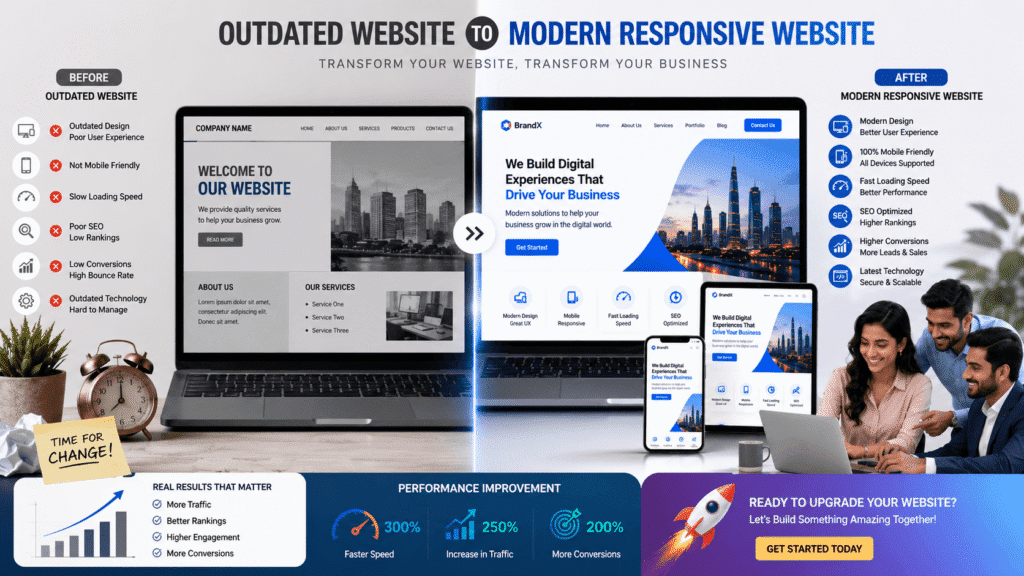
Many business owners invest in a website once and then forget about it for years. Unfortunately, technology, design trends, user expectations, and search engine algorithms continue to evolve. A website that looked modern a few years ago may now appear outdated and ineffective.
If your website isn’t generating leads, engaging visitors, or supporting your business goals, it may be time for a redesign.
In this article, we’ll explore 15 signs that indicate your business website needs a makeover and how a professional redesign can help you stay competitive in 2026.
Why Website Redesign Matters
A website redesign is more than changing colors and updating images. It involves improving user experience, performance, SEO, security, and conversion rates.
A professionally redesigned website can:
- Improve search engine rankings
- Increase lead generation
- Enhance user experience
- Build trust with visitors
- Increase conversion rates
- Strengthen your brand image
Businesses looking to modernize their online presence often invest in professional website redesign services to ensure their website meets current standards and customer expectations.
1. Your Website Looks Outdated
First impressions matter.
If your website looks like it was designed several years ago, visitors may assume your business is outdated as well.
Signs include:
- Old-fashioned layouts
- Low-quality images
- Cluttered pages
- Inconsistent branding
Modern websites focus on clean layouts, clear navigation, and professional visuals.
2. Your Website Isn’t Mobile-Friendly
More than half of web traffic comes from mobile devices.
If users need to zoom in, scroll sideways, or struggle to navigate your site on a smartphone, you’re likely losing customers.
A redesign ensures your website works perfectly across:
- Smartphones
- Tablets
- Laptops
- Desktop computers
3. Slow Loading Speeds
Website speed directly impacts:
- User experience
- Search rankings
- Conversion rates
If your pages take more than a few seconds to load, visitors often leave before seeing your content.
A redesign can improve:
- Image optimization
- Code efficiency
- Hosting performance
- Overall website speed
4. You’re Not Generating Enough Leads
Your website should actively help grow your business.
If you’re getting traffic but few inquiries, it could indicate problems with:
- User experience
- Call-to-action placement
- Page structure
- Trust signals
A redesign can optimize your website for conversions.
5. High Bounce Rate
A high bounce rate means visitors leave after viewing only one page.
Common reasons include:
- Poor design
- Slow performance
- Difficult navigation
- Irrelevant content
A redesign can encourage users to explore additional pages and stay longer.
6. Your Competitors Have Better Websites
Take a look at competitors in your industry.
If their websites appear more modern, faster, and easier to use, potential customers may choose them over your business.
Your website should position your brand as a professional and trustworthy option.
7. Difficult Navigation
Visitors should find information quickly.
If users struggle to locate:
- Services
- Pricing
- Contact details
- Portfolio items
your navigation likely needs improvement.
Modern websites prioritize simplicity and user-friendly navigation.
8. Poor Search Engine Rankings
Search engines favor websites that provide excellent user experiences.
Older websites often suffer from:
- Poor structure
- Missing SEO elements
- Slow performance
- Mobile usability issues
A redesign can provide a stronger SEO foundation and improve visibility.
9. Your Brand Has Changed
Businesses evolve over time.
If you’ve updated your:
- Logo
- Services
- Target audience
- Brand identity
but your website still reflects the old version of your company, it’s time for an update.
Your website should accurately represent your current brand.
10. Security Concerns
Cybersecurity threats continue to increase every year.
Older websites may have:
- Outdated software
- Unsupported plugins
- Security vulnerabilities
A redesign provides an opportunity to implement stronger security measures and protect customer data.
11. Your Website Is Difficult to Update
If every small change requires technical assistance, your website may be using outdated technology.
Modern content management systems like WordPress allow businesses to:
- Publish blogs
- Update content
- Add images
- Manage pages easily
Businesses seeking flexibility often choose professional WordPress website development solutions.
12. Your Website Doesn’t Reflect Your Current Services
Many businesses add services over time but forget to update their websites.
If visitors can’t clearly understand what you offer, they may leave without contacting you.
A redesign ensures your services are presented clearly and professionally.
13. Poor User Experience
User experience plays a major role in website success.
Common UX issues include:
- Tiny fonts
- Broken buttons
- Confusing layouts
- Excessive pop-ups
Modern website design focuses on simplicity, accessibility, and ease of use.
14. Your Website Isn’t Helping SEO Efforts
A website should support your SEO strategy.
If your website lacks:
- Blog functionality
- Optimized URLs
- Meta descriptions
- Structured content
it may be limiting your organic traffic potential.
A redesign can create a solid foundation for long-term SEO growth.
15. Your Website Is More Than 3–5 Years Old
Technology changes rapidly.
Even if your website still functions, it may not meet modern expectations.
A redesign every few years helps ensure:
- Better performance
- Improved security
- Modern design
- Higher conversion rates
Businesses that regularly update their websites often outperform competitors who neglect their online presence.
Benefits of Redesigning Your Website
A professional redesign can deliver significant advantages:
Increased Conversions
Better layouts and stronger calls-to-action help turn visitors into leads.
Improved Search Rankings
Modern SEO practices can increase visibility in search engines.
Better User Experience
Visitors are more likely to stay and engage with your content.
Stronger Brand Image
A polished website enhances credibility and professionalism.
Higher Mobile Performance
Responsive design ensures a seamless experience across all devices.
How to Plan a Successful Website Redesign
Before starting a redesign project:
Analyze Current Performance
Review:
- Traffic data
- Bounce rates
- Conversion rates
- User behavior
Define Goals
Determine whether you want to:
- Generate more leads
- Improve SEO
- Increase sales
- Modernize branding
Review Competitors
Identify opportunities to create a better experience than competing businesses.
Work With Professionals
Experienced designers and developers can help create a website that supports your business goals and delivers measurable results.
Conclusion
Your website should be one of your most powerful marketing tools. If it’s outdated, slow, difficult to use, or failing to generate leads, a redesign could significantly improve your online performance.
The 15 signs outlined above are strong indicators that your current website may be holding your business back.
Investing in a professional website redesign can improve user experience, search rankings, credibility, and lead generation—helping your business remain competitive in 2026 and beyond.
If you’re considering a redesign, now is the perfect time to evaluate your website and identify opportunities for improvement.